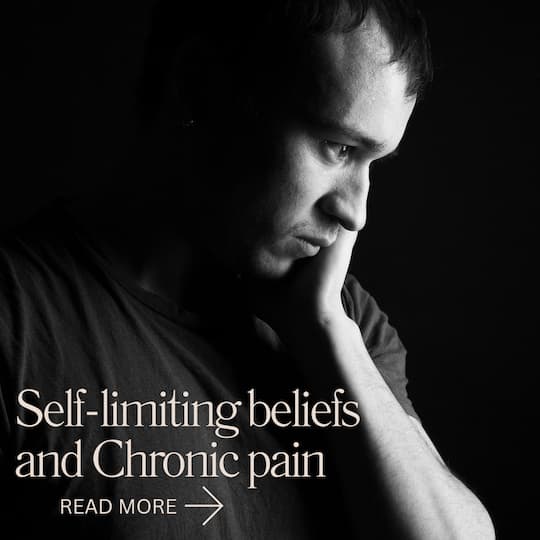
What Are Self-Limiting Beliefs?
Self-limiting beliefs are deeply held assumptions, ideas, concepts or thoughts that can hold back our potential, behavior, or future outlook. These beliefs often come from past experiences, societal conditioning, or negative self-talk. They can prevent us from achieving our goals, pursuing opportunities, or living a fulfilling life. They act as internal mental barriers that can limit growth, confidence, and action.
Often because sometimes in the past, maybe when we were young, we felt they made us protected and feel safe somehow but as an adult they just do not work for us anymore. We all make beliefs, unconsciously or consciously for a reason. Initially. Then it becomes unconsciously a habitual belief. And under that belief is really the emotion of fear that is making it so pervasive.
Examples of self-limiting beliefs include:
- “I’m not good enough.”
- “I don’t deserve success.”
- “I’ll never be able to change.”
- “I’m too old/young to start something new.”
- “I’m not smart/talented enough.”
How to Identify Self-Limiting Beliefs
We need to do some inner reflection to help us identify our self-limiting beliefs. It can be tricky at first but you can definitely get better at it.
1. Pay Attention to Negative Self-Talk
- Notice the thoughts that arise when you face challenges or setbacks.
- What am I saying to myself in this situation?
- Things like: “I can’t,” “I’ll never,” or “I’m not capable,” phrases
2. Look for Patterns of Avoidance or Procrastination
- What am I avoiding, and why?
- For example, if you avoid applying for a promotion, explore the underlying belief. Is it fear of failure or fear of success, or do you believe you’re not qualified? Or not worthy in some way?
3. Examine Areas Where You Feel Stuck
- Identify areas of your life where you feel stagnant or unfulfilled (e.g., career, relationships, health).
- What beliefs might be holding me back in this area?
4. Think about Past Experiences
- Think about past failures or disappointments and how they shaped your beliefs.
- If you failed at a task once, do you now believe you’ll always fail at similar tasks?
5. Pay attention to Emotional Triggers
- Pay attention to situations that evoke strong emotions like fear, anxiety, or self-doubt.
- What belief is causing this emotional reaction?
- If public speaking makes you anxious, you might believe, “I’ll embarrass myself if I speak up.”
6. Challenge Your Assumptions
- Write down your beliefs and question their validity.
- Ask yourself:
- Is this belief based on facts or assumptions?
- Is this belief helping or hindering me?
- What evidence do I have to support or refute this belief?
7. Seek Feedback from Others
- Sometimes, others can spot limiting beliefs that you might not see in yourself.
- Ask trusted friends, family, mentors or psychologists: Do you notice any patterns in my thinking or behavior that might be holding me back? (A psychologist pointed out my self worth issues that I had no real awareness of at that point in my life)
8. Use Journaling to Explore Your Thoughts
- Write freely about your fears, doubts, and challenges.
- Look for recurring themes or beliefs that come out. This is how I found my fear of failure and issues with self-worth (not enough feelings)
9. Identify “Should” Statements
- Pay attention to thoughts that include the word “should.”
- “I should be further along in my career by now.”
- These statements often reflect societal expectations or self-imposed limitations.
10. Notice Comparisons to Others
- If you frequently compare yourself to others and feel inadequate, it may indicate a self-limiting belief like, “I’m not as good as them.”
Common Signs of Self-Limiting Beliefs
- Feeling stuck or unable to move forward in life.
- Procrastinating or avoiding challenges.
- Fear of failure or rejection.
- Low self-esteem or self-worth.
- Feeling like you don’t deserve success or happiness.
- Constantly doubting your abilities.
Examples of Self-Limiting Beliefs
- About Ability: “I’m not smart enough to succeed.”
- About Worthiness: “I don’t deserve love or happiness.”
- About Change: “It’s too late for me to change my life.”
- About Failure: “If I fail, it means I’m a failure.”
- About Others: “People will judge me if I try something new.”
My main one has always been about failure. This sense that I am a failure as a person has been pervasive in my life. Which is impressively strong with chronic pain. When I am incapable of something due to disability that then becomes I am failing as a person not because I have a limitation. I have worked on this for years and finally am getting beyond it. But being aware of it was the first step.
How to Overcome Self-Limiting Beliefs
Once you’ve identified your self-limiting beliefs, you can work to re-frame them:
- Replace Negative Beliefs with Empowering Ones: For example, change “I can’t do this” to “I can learn how to do this.”
- Take Small Steps: Challenge your beliefs by taking small, manageable actions that prove them wrong.
- Practice Self-Compassion: Be kind to yourself and recognize that everyone has limiting beliefs.
- Seek Support: Work with a therapist/psychologist, coach, or mentor to help you re-frame your thinking.
- Visualize Success: Imagine yourself overcoming the belief and achieving your goals.
Some specific self-limiting beliefs we can have with chronic pain may be:
Self-limiting beliefs can significantly impact how we experience and manage chronic pain. These beliefs often shape our perception of pain, our ability to cope, and our willingness to try treatments or various lifestyle changes. It really can affect our perception of pain and what we do about it. I have had more than a few of these at various times in my pain history. And worked through them. And then had other ones. Sometimes they are harder to get rid of or harder to determine they are the problem. Or combined with other limiting beliefs we have.
1. “The pain will never go away, so there’s no point in trying.”
- This belief can lead to hopelessness and resignation, preventing us from seeking treatment or making lifestyle changes that could improve our condition. I have, in the past, felt this one strongly.
2. “I am broken or damaged beyond repair.”
- Viewing ourselves as irreparably broken can lead to feelings of worthlessness and discourage efforts to manage pain or improve quality of life.
3. “I can’t do anything to reduce my pain.”
- This belief undermines self-efficacy and may prevent us from exploring pain management strategies, such as physical therapy, mindfulness, or relaxation techniques.
4. “I deserve this pain because of something I did wrong.”
- Associating pain with guilt or punishment can create emotional distress, exacerbating the perception of pain and hindering recovery.
5. “If I move or exercise, I’ll make the pain worse.”
- Fear of movement (kinesiophobia) can lead to avoidance of physical activity, which may result in deconditioning, stiffness, and increased pain over time.
6. “No one understands what I’m going through.”
- Feeling isolated or misunderstood can lead to withdrawal from social support systems, which are important for emotional well-being and pain management. However, it’s common to not feel like people completely understand what we are going through. Dealing with isolation or social isolation can be complex.
7. “I’m a burden to others because of my pain.”
- This belief can lead to guilt and reluctance to ask for help, which may result in increased stress and worsening pain. I know I have in the past felt like a burden to others. This definitely led to feelings of guilt and being determined not to ask for help even when I needed it.
8. “I can’t live a normal life because of my pain.”
- Believing that chronic pain completely defines our life can lead to a loss of identity and purpose, reducing motivation to engage in meaningful activities. Honestly, I think I belief that pain limits and contorts the life I lead. But not defines it.
9. “Pain is always a sign of harm or damage.”
- Misinterpreting pain as a sign of ongoing tissue damage can lead to excessive caution and avoidance behaviors, even when movement or activity is safe and beneficial. This is a difficult one because pain can be seen as a sign we shouldn’t do certain things and activities which can lead to us avoiding things and deconditioning, which further makes the pain worse and can make isolation worse as well.
10. “I need to push through the pain to prove I’m strong.”
- Overexertion to prove resilience can lead to flare-ups and increased pain, creating a cycle of overactivity and crash. This one was common for me. I would constantly push through the pain, crash and burn, do it again, have the same result, and again and again. Until I burned out. Several times.
11. “I can’t trust my body anymore.”
- Losing trust in our body can lead to hypervigilance and anxiety, which can amplify the perception of pain.
12. “I’ll never be happy or fulfilled because of my pain.”
- This belief can lead to depression and a lack of engagement in activities that bring joy or meaning, further reducing quality of life.
13. “I’m weak if I can’t handle the pain.”
- Associating pain tolerance with strength can lead to shame and reluctance to seek help or use adaptive strategies. I held this belief for way too long.
14. “My pain defines who I am.”
- Over-identifying with pain can limit personal growth and prevent us from exploring other aspects of our identity.
How to Address Self-Limiting Beliefs:
- Cognitive Behavioral Therapy (CBT): Helps re-frame negative thoughts and develop healthier beliefs about pain.
- Mindfulness and Acceptance: Encourages acceptance of pain without judgment and reduces the emotional impact of negative beliefs.
- Education: Learning about the nature of chronic pain can help get rid of myths and reduce fear.
- Support Groups: Connecting with others who understand chronic pain can reduce feelings of isolation and provide new perspectives.
- Graded Activity: Gradually increasing activity levels can help rebuild confidence in the body’s abilities and reduce anxiety about movement.
I found CBT to be extremely helpful for me. I also found the limited time I was in a support group at the pain clinic to be equally beneficial- understanding the different experiences others went through with their pain reduced the isolation and gave me a lot of perspective. Another beneficial one for me specifically was journaling because you can begin to notice the pattern of thoughts and emotions that come up, catch them even, to start to see these beliefs.

Read Substack: Two common limiting beliefs I have with Chronic Illness
 Chronically Nikki
Great post with lots of useful advice, thank you.
I’ve had issues with self limiting beliefs in the past and they have been reinforced by the attitudes of others towards my illness too. Through a combination of CBT, a pain management course and journaling I’m well on the way to switching my beliefs to a more helpful channel and it feels so liberating even if it is hard work.
Best Wishes
Sarah
LikeLiked by 2 people
I’ve had a problem with them in the past too. It definitely is hard work to get through them. But it makes a huge difference, doesn’t it?
LikeLike
It certainly does yes😊
LikeLiked by 1 person