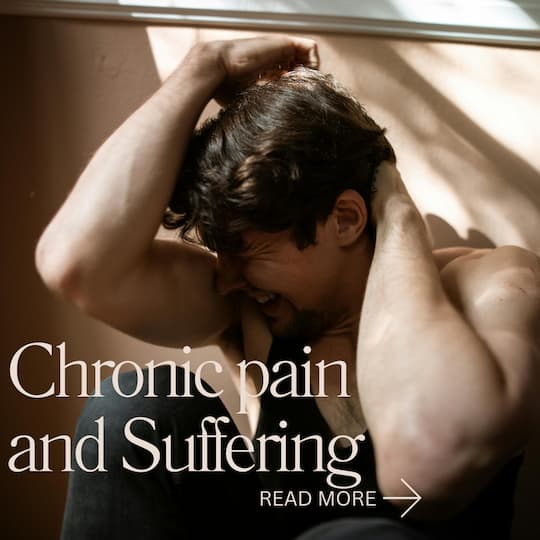
I have read the book ‘Everything is F*cked: A book about hope‘ which was quite intriguing, by Mark Manson. Parts of me got me thinking about the nature of suffering. And meaning in the nature of suffering once again. So I am pondering this for a few posts.
‘Pain is inevitable, suffering is a choice’ is something I have heard many times before. It used to infuriate me. I’ll be honest. While in pain and saturated in depression I couldn’t fathom a space between pain and suffering. They were one. And in that state, they are one. The pain creates a suffering that has such meaning to it, I couldn’t find a way out of it. I was thinking my way further into it, honestly. And forcing some space between the two took over a decade, medication and therapy. Not for one moment would I minimize that experience. Chronic pain is a constant flux of sensation. Many people avoid depression. Some of us do not. And I for one, do not think it is shocking we fall into it. The persistence of the pain, enduring it for years and years, is mentally and emotionally exhausting.
So there is a reason why I do not take too kindly to the saying. Even though I believe it to be true, in essence. It is just, I do not believe we can always find that space.
This perhaps is better:
“Between stimulus and response there is a space. In that space is our power to choose our response. In our response lies our growth and our freedom.” —Viktor Frankl
There is that space. And in creating that space I found a way out of my depression. But that isn’t an easy journey. And it isn’t to say depression won’t find me again.
Suffering
So in his book Mark Manson is right when he talks about suffering. Or at least, I share that theory, in part.
“The Buddha said that suffering is like being shot by two arrows. The first arrow is the physical pain- it’s the metal piercing the skin, the force colliding with the body. The second arrow is the mental pain, the meaning and emotion we attach to being struck… in many cases, it lasts far longer.” (pg186) “That while pain is inevitable, suffering is always a choice. That there is always a separation between what we experience and how we interpret that experience.”
So there is a lot of truth to this
When I used to drive a car and someone would cut me off or do something else equally annoying, I would easily make the distinction between that momentary experience and choosing my reaction. I would usually choose to say ‘dick’ out loud to acknowledge to myself that I saw that and to release it, but with no actual emotion in the word. No force to it. Just dick. And then move on. Let it go. Because I never wanted some random dick to have any power over my good mood or day.
Easy peasy
I’ll just do that then, will I?
Except some experiences really suck. Like pain. And sometimes they never shut the hell up. Like chronic pain. What then?
I will just do that, but work way harder at it, and instead of for a fleeting second, I will do it indefinitely and definitely have a real hard go of it on intensely bad pain durations. So easy peasy? Not so much.
With chronic pain we chronically dampen that suffering
We can and we do make space between the pain and the suffering all the time. Hell, we do it All the freaking time. We know, for example, focusing on our pain makes it more intense, while distracting from it helps us not focus on it. We know ruminating on it creates problems because it creates meaning and then more Meaning and MORE MEANING that was never there before and that can be extremely depressing. I should know… I was awesome at this. I called it the slippery slope into despair and happened frequently with unmanaged high pain at night. All that interpretation is a massive problem.
So we know many ways to deal with the emotional and mental consequences of pain from meditation to Cognitive Behavioral Therapy… Art therapy to a gratitude journal… and we pick and chose the best for us to manage these normal responses to pain that we get a damn constant influx of because we have an abnormal amount of pain. We know that also some days are just Bad Days. And we just have to get through them.
Relentless pain
The main problem is that chronic pain is so relentless. The physical Pain Itself. It can not be effectively treated. Often it is not effectively treated these days. That then makes it severely limiting as well.
IT
NEVER
SHUTS
UP
This is never going to end. It is relentless. There is no break. No pause button. No volume control.
It literally doesn’t matter. Because it never ends.
Make it make sense
But we can’t make sense of this. Our brain wants to making meaning from our pain experience and it can’t. It is meaningless constant pain. And any meaning we Make tends to be a crappy belief system that makes us feel worse but we are not even consciously aware of. Like I used to think it made me ‘useless’ and ‘worthless’ and a ’failure’. So thanks for the ‘input’, brain. I felt Great with that rolling around my head. But whether we want it to or not, it will fling out beliefs and meaning.
The signal
Physical pain has distinct biological and psychological components that effectively represent stimulus and response. The biology of pain is the signal transmitted through the central nervous system that “something is wrong.” The psychology of pain is the interpretation or meaning we give to that pain signal—the internal self-talk and beliefs about it which then drive our emotional reactions. Suffering results from mental and emotional responses to pain. The biological and psychological facets of chronic pain combine to become like a smoke detector that goes on and stays on, continuously sounding a harrowing alarm at high volume. Psychology today
But we have to create this space between signal and response all the time. Sometimes, man, it just doesn’t work that way. But making space between the two doesn’t always mean not having an emotional reaction. Sometimes it means acknowledging the emotional reaction. Feeling it. Releasing it. And not attaching extra meaning and beliefs onto the pain itself or the emotion that came with it. Like if the pain comes with some sadness, I can have a lot of self-compassion for why it did that. Acknowledge it did and why, without traveling down the road of all the sads and why my life sucks.
I think a lot of the time we can have the emotional reaction when it comes to chronic pain without having the added mental anguish that can be added to the interpretation. I don’t think we should be shamed for our emotions. I think it is a fine strategy to create that space from the pain and suffering, but when the emotions come? Feel them.
The interpretation of the signal
Suffering is both a cause and an effect of the catastrophic cognitions and distressing emotions associated with chronic pain: anxiety, irritability, anger, fear, depression, frustration, guilt, shame, loneliness, hopelessness, and helplessness. Negative thinking only makes situations we believe to be “bad,” worse. Many people, including those who do not suffer from chronic pain, can ruminate on something by continuously and unproductively replaying it in their minds or magnifying the negative aspects of it. Our thoughts have the capacity to make us miserable, and negative thinking can be especially insidious, feeding on itself, with the potential to become a self-fulfilling and self-defeating prophecy. For people with chronic pain, there is a direct correlation between negative thinking and the level of pain they experience. It’s a vicious circle wherein pain triggers negative thoughts and self-talk which translate to feelings that coincide with suffering, and increases muscle tension and stress. That, in turn, amplifies pain signals, triggering more of them.Psychology today
I find it is the difficulty in coping with the pain and emotions that leads to mental suffering. And it is easy to travel down the road of negative thinking. Spiral down it. I think when I made some space between the pain and my thinking about the pain, it definitely helped a lot.
There will still be suffering
I still think no matter what we do, our coping skills, our strategies… we can’t eliminate the suffering of chronic pain. Reduce. But not eliminate. Muffle, sometimes. And not others.
The signal of pain never ends. Coping with suffering, therefore, never ends. We are in a never-ending push-pull cycle between pain signals and the suffering it causes. And sometimes we suffer more than other times. It is just really hard to consistently, constantly maintain this balance and control over pain and our reaction and response to pain. We can do way better than we used to. Sure. But we are still going to have some really cruddy days. Weeks. Months. Because sometimes it just SUCKS. And we want to acknowledge that. And then go back to trying to dampen and manage our suffering in any way humanly possible.
The pain signal is there. Here we can dampen our emotional response sometimes. Because we are quite used to pain. The emotional response is triggered sometimes. From there is where we have some control over our response again. Over any meaning attached to the experience. Over the ruminations.
But there are days we don’t. And I think that is totally normal given the consistency of our pain signal and therefore the constant battle to respond. A little emotional reaction is sort of within the realm of normal, I’d say. Let me have my feels.
Now then IS life Suffering according to Buddhism?
Life is suffering – this link helps describe what is meant by ‘suffering’ and it is a lot more than we put into the word because the ORIGINAL word in the notion is Not ‘suffering’ at all but ‘Dukkha’. It means a lot more than ‘suffering’.
I know you have problems that cause pain. You’re hurt and it’s not feeling nice. The good news is that nothing is wrong with having problems. It’s part of life, life will never be perfect for us to enjoy only when it is perfect, and every single living being, I promise you, has them. However, when we resist the situation, the fact that there is pain and we fill our mind with agitation, anger and aversion about the pain (situation) we are adding another pain. So really, what we are doing, is burden our already painful state with some more pain.
Acceptance, on the other hand, is not (I repeat – is NOT) equal to allowance & agreement. It’s not to say we like the situation that causes our pain.Acceptance is when we, wholeheartedly, say:
I’m in pain. I don’t like this. But let me stay with this for a short while. What is it that hurts me? And what is it showing me about me and my life lessons? What can I learn? And what can I change? Why and how do I change this? Little School of Buddhism
This is what the author of the book Mark Manson refers to as engaging with our pain rather than avoiding it. With chronic pain we can have acceptance and that doesn’t mean we do not stop trying to improve our situation, it just means we accept the situation as it is, live life as it is, engage with the pain as it is and limit suffering as best we can. Resisting the situation does cause a lot of mental anguish. Causing a lot of rumination and thoughts that just bring us a great deal of suffering. The fact we cannot change the pain itself is a fact itself that causes us suffering actually. So again we are trapped in a cycle of pain signal, suffering, trying to dampen that response to suffering. Acceptance is just when we are acknowledging this cycle and how we best cope with it.
We have to figure out, in our own way, on our own paths, how to find balance with that. Complicated by the biological impacts of pain. Complicated by the comorbids of our illness which include mental illnesses like depression and anxiety. Knowing suffering is something we always have to cope with because pain never ever turns off. And creating as much space between pain and suffering as we can, when we can, if we can.
Just saying we have a keen understanding of pain. And a keen understanding and relationship with suffering and how we cope with it. You can choose how you react to it for 100 days and then… it just gets to you… but then you choose how you react to it 100 more… but then it Gets to you again. Push. Pull. That is the nature of chronic pain.

See also
Chronic Pain: Pain is inevitable, suffering is not -post on Medium
 Chronically Nikki
While we go hiking, each of our steps invites us to the next. These are the changes we bring to our path experience, guided we are by the nature of the landscape. No one questions what the landscape is, whether it is steep, flat, by the sea, in the nature or deep in the desert. Thus, pain is very like this component of the landscape that we walk through, between well-being and pain with these infinite graduations, these thousand imperceptible changes within thousand imperceptible changes. While I was hiking your text on pain and suffering, your reflections inspired me this analogy. I find these reflections deeply true and so this testimony guides me to express, gratefully, a great Thanks.
LikeLiked by 2 people
It was a bit long this one. But I wanted to express a few thoughts in it. I think about this one frequently.
LikeLiked by 1 person