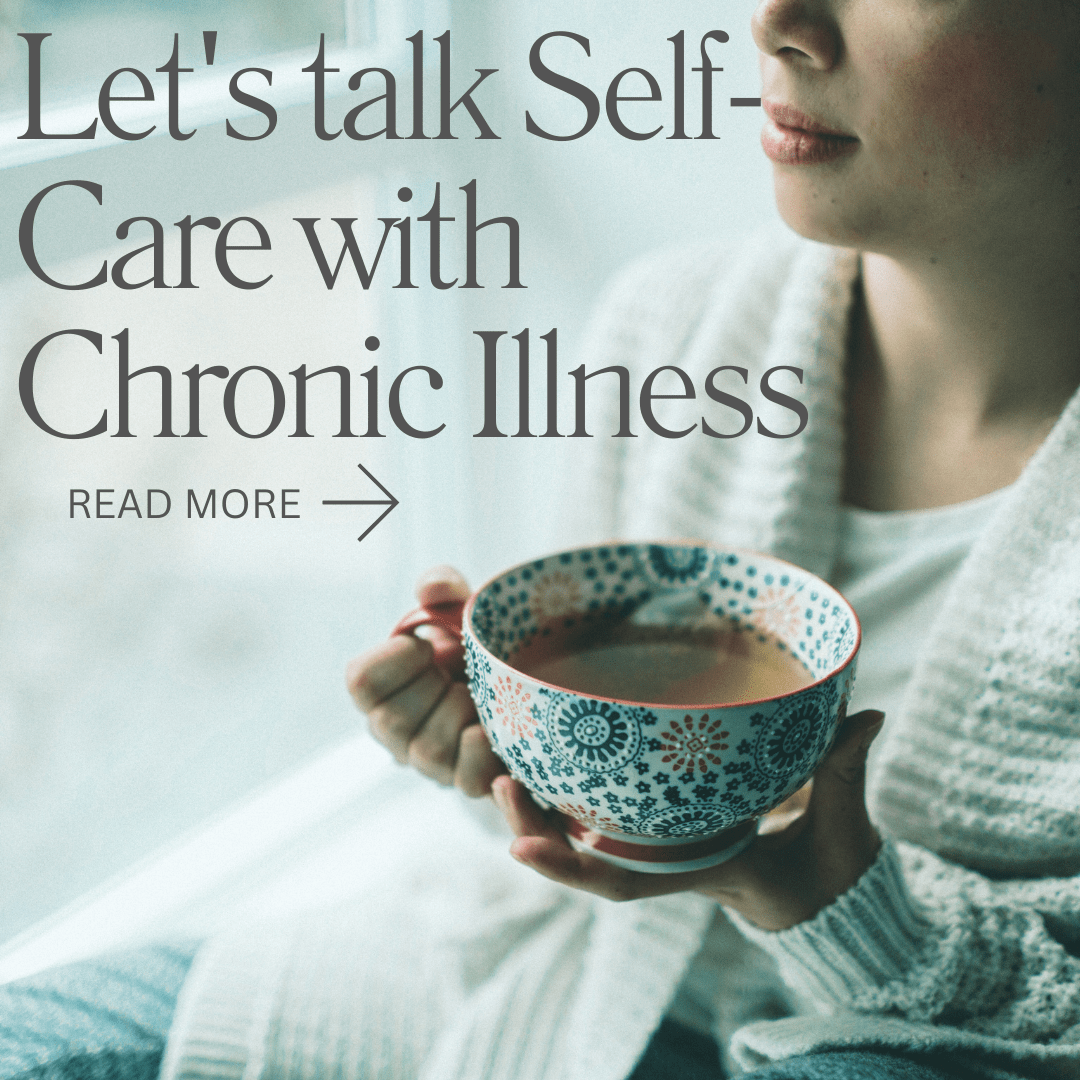
Self-care is vital for helping us manage our chronic illnesses and chronic pain.
WHO (World Health Organization) defines Self-care as “Self-care is the ability of individuals, families and communities to promote health, prevent disease, maintain health, and cope with illness and disability with or without the support of a health worker.” And to “empower individuals and communities to manage their health and well-being”
It is managing various stressors to help our well-being overall in areas of hygiene, nutrition, and medical care. As such, there are quite a few things we can do that help us in the area of self-care. Quite a few things you do right now that you may not interpret as self-care that are.
Self-care requires checking in with yourself about how you’re doing physically, mentally, and emotionally. –EveryDay Health
Self-Care can help with:
- Reducing stress levels
- Increasing self-worth
- Managing our chronic conditions
- Reduced burnout
- Improved quality of life

Areas of Self-Care to Consider
There are lots of areas to explore when looking at to improve your self-care. Areas you may want to focus on that are lacking. Areas that you may want to focus on to specifically help you with stress. Areas you may want to focus on that will specifically help you maintain your illness and health.
Here are the main categories and some of the things you can find in those categories but by no means, not everything in all those categories. You may think of more things to put into these categories that fit the criteria and that is good.
Emotional/Relationship Self-Care
- De-compressing with a self-care routine, perhaps before bed to relax. Such as having a hot Epsom salt bath and a cup of decaffeinated tea every night.
- Socializing to reduce isolation and feel connection.
- Connecting with your community. Community events, markets, fairs.
- Joining a local interest group. Such as a Book Club.
- Volunteering.
Physical Self-Care
- Taking care of our sleep hygiene and prioritizing good sleep.
- Taking care of our physical hygiene.
- Trying our a new exercise routine.
- Trying out a nutrition plan or eating regular, balanced meals.
- Do activities that manage your stress. Any number of activities can reduce stress for us individually. Going for a walk. Playing a video game. Reading. Resting. Baking. Stretching.
- Maintain your medical and dental appointments. You can add in maintaining your alternative therapy appointments in there as well.
- Following treatment plans, taking medication as prescribed.
Spiritual Self-Care
- Meditation.
- Spending time in nature.
- A gratitude journal.
- Going to church/spiritual events.
- Praying.
- A reflection journal.
Mental Self-Care
Keeping the mind engaged, interested and sharp.
- Doing creative activities.
- Doing your hobbies.
- Reading a book.
- Learning something new. A new language, a new subject you are into or a new skill.
- Playing board game, video game, or doing a puzzle.
- Learning a new hobby.
- Doing exercise.
- Seeing a therapist/psychologist if needed.
It is important we choose self-care that we can incorporate into our daily routine in order to receive that distressing benefits. Self-care is not self-indulgent. It is important to our daily coping strategy.
Getting going with a routine
- Start by choosing a self-care area and something in that area you want to incorporate into your routine in the next couple of weeks. Something you think will help your overall well-being.
- Practice this new self-care routine every day for the next few weeks. If not every day the pick a schedule that works for the activity such as 3 times a week.
- Every night or morning reflect on whether this new routine is benefiting you. If not, consider a different routine. But give it time to do so. Remind yourself why you chose it. But if it is causing problems reflect on what those problems are and whether they can be resolved or not.
- When you are ready and have made this a habit after about three months, you can add in a new routine. You do not want to go too fast or they will not stick and you want a self-care routine you enjoy and doesn’t cause you stress.
- As needed you can get support for your new routine. Depending on what that new routine is you can get support through a friend, a therapist, a dietitian, therapist, doctor, the workplace or a loved one. Or reflect on your own in a journal on your progress.
Chronic Illness
It can be particularly difficult with chronic illness to have routines, especially when we have depression and/or fatigue. Maintaining self-care can take a lot of effort. More than a lot of people realize we have to put into it. We are under a lot of physical, mental and emotional stress all the time due to our health. And it take a lot to constantly endure that assault and try to reduce the impact of that stress.
We have to pick and choose the self-care routines that work best for our lifestyle. And the ones that give us the best stress reduction for us personally without causing more of a burden.
So try to keep it simple and don’t take on too much. You want to improve your overall well-being not tax your resources.
Source:
Every Day Health
Very Well Health
 Chronically Nikki
Leave a comment